



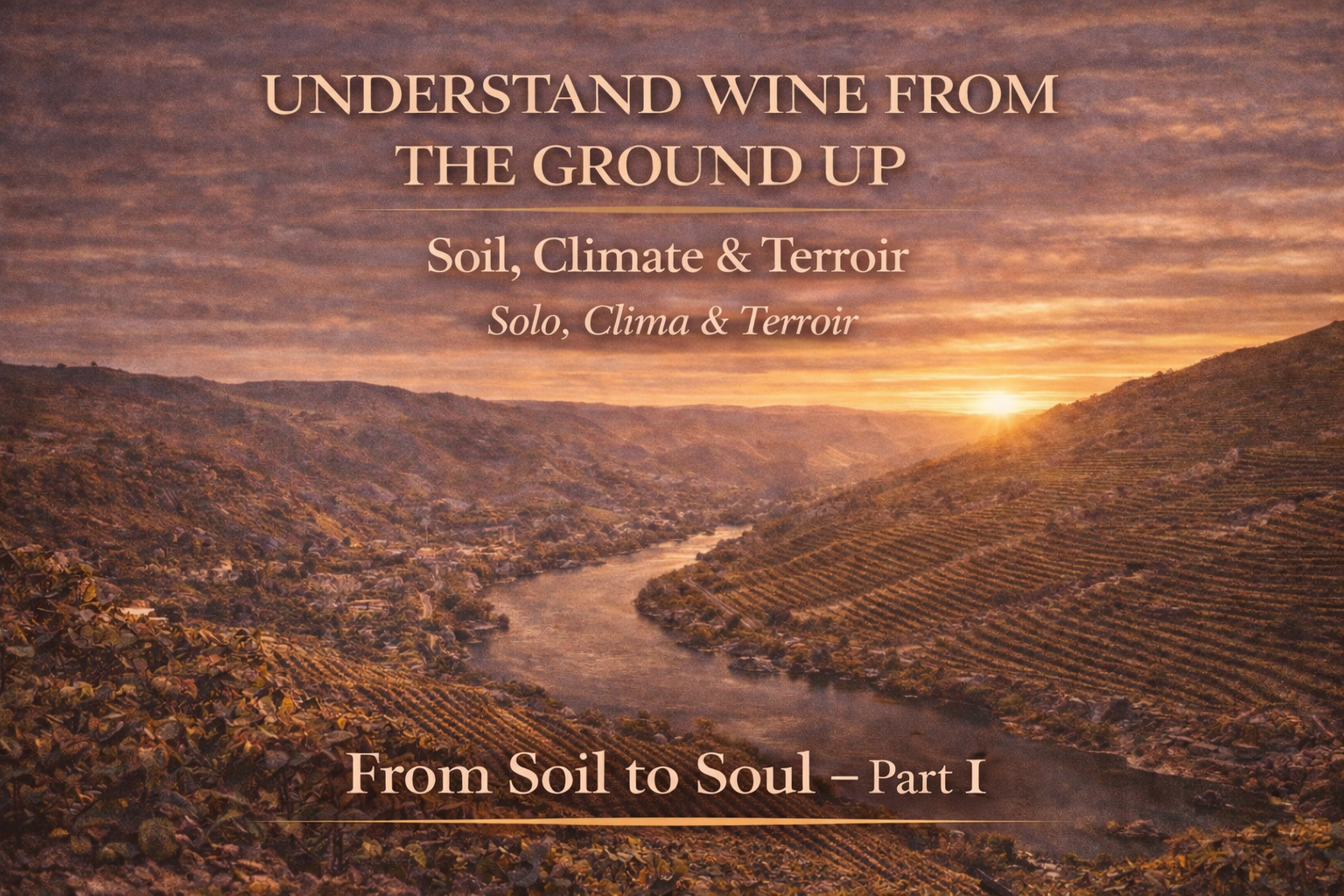
From Soil to Soul · Part I — The Origin
Wine does not begin in the cellar.
It begins underground.
Before fermentation, before oak influence, before aging potential — there is geology, climate, and vine physiology. To truly understand wine, one must understand what shapes the vine long before grapes reach the winery.
This first phase of our structured journey into the world of wine focuses on origin — the environmental and agricultural forces that define structural potential.
Geology at Work
Geology is not a romantic idea in wine. It is a structural reality.
Soil influences:
- Water availability
- Root penetration
- Thermal regulation
- Nutrient uptake
- Vegetative vigor
In regions such as the Douro Valley, fractured schist soils allow vine roots to grow deep through rock fissures. This deep rooting system supports water balance during hot summers and promotes moderate water deficit — a key factor in vine equilibrium.
Soil does not directly create flavor.
It influences vine physiology — and physiology influences structure.
Terroir as an Environmental System
The word terroir is often misunderstood. It is neither mysticism nor marketing.
Terroir is an environmental system composed of:
- Soil
- Climate
- Topography
- Human decisions
Together, these elements influence vine growth, fruit development, and ripening balance.
Terroir shapes vine physiology before it shapes flavor.
Sun exposure, slope orientation, altitude, and vineyard management interact with soil composition to form the structural foundation of wine.
Soil Types and Structural Influence
Different soils influence water dynamics differently — and water dynamics influence vine balance.
Schist
A fractured metamorphic rock that promotes deep root systems, low natural fertility, and high thermal inertia.
Limestone
Known for excellent drainage and frequently associated with greater acidity expression and structural tension.
Clay
Characterized by high water retention and thermal stability, clay soils can increase vine vigor if not carefully managed.
Each soil type contributes to wine structure through its interaction with water availability and root development.
Quality Under Moderate Stress
Vines do not produce their finest fruit under conditions of excess.
But they also do not thrive under extreme stress.
Balance is essential.
Moderate water deficit, controlled yield, and low fertility soils regulate vegetative growth and enhance phenolic concentration without compromising photosynthesis.
Vines concentrate under balance — not under extremes.
Agriculture Before Art
Wine structure is born in the vineyard.
Acidity, tannin potential, concentration, and balance are shaped by agricultural conditions and viticultural decisions.
Winemaking interprets and expresses what viticulture provides.
Wine is agriculture before it becomes art.
Conclusion
To truly understand wine, one must look beneath the surface — literally.
Geology, climate, topography, and human stewardship form the structural foundation of every bottle. The vineyard defines potential; the cellar defines interpretation.
This concludes Part I of our journey.
Next, in Part II, we explore the biology of the vine — from bud break to ripening — to understand how plant physiology determines harvest decisions.